A Geek's Cogitations, Conjectures and other Cortical Experiences

Category: Technology Page 6 of 14

Tech Talk: Windows 10’s Imminent Release

borgJune started with Microsoft announcing that Windows 10 will launch on July 29th (so by imminent I meant two months). Be that as it may, many may wonder if Windows 10 is worth the upgrade and I would say it is. I know many may be shocked to hear me say that as I have been a long time advocate for Windows 7 and a long time opponent of *the dismal* Windows 8; but I have my reasons. Windows 10 does appear to have some of the Windows 8 look-and-feel, but Microsoft was (finally) smarter about how it was implemented for those of us that don’t always use touch-enabled devices.

I would recommend you upgrade, for starters, because Windows 10 will be free (probably Microsoft’s way of saying “Sorry we made you waste your money on Windows 8”). I haven’t looked again, yet, but the last thing I heard was that Microsoft will be offering Windows 10 for free for one year if you are currently using Windows 7 and it will be free indefinitely if you are using Windows 8. A few folks have told me that might have changed, but I haven’t seen that printed anywhere yet (if you know this has changed, please leave a comment).

If you are running Windows 7, it might behoove you to upgrade because mainstream support for Windows 7 ended January 13th of this year. This basically means Microsoft will stop providing security updates and you are on your own to protect yourself from viruses and malware. Windows 7 does have extended support for another 5 years but I don’t really know what all that entails (my theory is bug fixes and minor tweaks).

I have had the Tech Preview of Windows 10 installed in a VM on a work laptop for a few months, so I’ve gotten to play around with it off-and-on. If you have been using Windows 7 then, from a usability perspective, Windows 10 won’t be a huge shift for you. It’s basically Windows 7 with some tiles in the start menu. There are some other features that may improve your experience, but all the primary functionality should still be pretty familiar (there is just more color, ostentatious design does make things feel new and shiny). Perhaps after Windows 10 officially launches I can do a write up of some of the other features you didn’t know about that you might find useful (ex: multiple desktops – of course if you have used a Mac, this is a feature that has been around for several years).

NOTE: If you do plan to upgrade to Windows 10, you can reserve your upgrade now. If your Windows 7/8.1 environments are up-to-date with all service packs and updates, you should see a Windows icon in the lower right section of your taskbar.

/cheers

(P.S. In not-so-related news, Microsoft is re-branding Windows 8.1 and will reveal the “new look” in a special Vanity Wired issue subtitled “Call Me C8L1N”)
Inundated with Wearable Tech

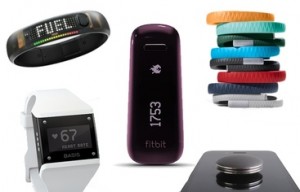
WearableFitTech2Microsoft actually got ahead of the competition (for the first time in about 15 years) and released a competing product for Fitbit‘s and Apple’s not-here-soon-enough watch. In fact they even beat Fitbit to the punch despite their recent announcement of new products (Charge, Charge HR and Surge). It just takes Apple or Microsoft to get involved and now the market is already starting to saturate with wearable fitness tech. Prior to this tech craze the only wearable fitness tech anyone really knew about were Fitbit, Nike Fuelband and Bodymedia Fit.

Now that Microsoft and Apple have entered the market we should all prepate to become inundated with hundreds of wearable tech options. The flame wars will begin soon. Google will probably have one out by the end of the next quarter and all of us will be taking cheap shots at the short comings of the others tech because, lets be honest, we all like to exploit the inadequacies of the competitor (I am definitely guilty of it).

I have had my Fitbit for nearly two years and I’m not really in the market to replace it. If, hypothetically, I were in the market for an updated fitness device, I wouldn’t be looking at Microsoft or Apple purely based on the cost. Anything above $130 is just a little above my price range for something that just needs to measure my steps and activity levels; however I am not a fitness nut. I don’t jog/run, I don’t lift weights with any regularity, so perhaps I’m not the target market for these expensive wearable tech devices – which is entirely possible, after all I didn’t do the market research for these guys. Be that as it may, my hypothesis is still that these companies are taking advantage of a popular trend right now, which does make business sense, but doesn’t always render quality products.

Regardless of which of those theories is correct, its actually an encouraging trend. Perhaps it will be the motivation people need to live healthier lives; the Fitbit has certainly helped me to lose weight and keep it off. I’m certainly a fan of people making the effort to become more fit instead of mandates and soda bans coming down from the government.

Btw, if you hadn’t heard about Microsoft’s latest gadget, its the Microsoft Band. It does actually look pretty neat but I’m not excited about that price tag.

minion_keboard_smI could get so much more accomplished if I only had minions!

Tech Talk: JavaScript Frameworks

Web_programmerOver the past year I have had several projects at work (I feel like a real live consultant now) and I have used a few new technologies and tools on those projects. The skills that have really come a long way are my JavaScript skills.

I know what some of you might be thinking, “WTF, JavaScript?!?”

Yes. JavaScript. It’s not as cumbersome and taboo as it was back in the 90s. There are new tools and frameworks out there that have actually made JavaScript not only easier but … dare I say it … fun?! The library that has made JavaScript easier, for me, is jQuery, which I have been using for a couple years now and I won’t write any JavaScript without it. There are two frameworks that I have played around with recently that have really made JavaScript kind of fun: Knockout and AngularJS (I know these are not the only two but they are the only two I have spent any time using).

I think I have gone on before about how much I enjoy the magic behind jQuery. I even saved a few on snipplr which have had a few strangers favorite, although I could probably improve on most of them with the newer versions of jQuery. Using jQuery will definitely make your web page feel very dynamic and that seems to be the paradigm we are going for these days. A “web site” is quickly becoming a legacy term and we are evolving into developing “web apps” – which is essentially a website that functions as if it were something running on your desktop (instead of in your browser). I’m sure the evolution and massive adoptions of tablets and mobile devices has been a major catalyst.

The jQuery syntax and plethora of plugins really makes developing web apps much easier and adds a level of enjoyment to it. In fact writing your own jQuery plugin doesn’t require any additional software or new syntax, they are still js files that just use existing jQuery syntax. I have yet to write one myself, but I really want to, someday … if I can think of a worthwhile plugin to write. I have noticed a drawback about jQuery lately; the more complex you make your page the more JavaScript you have to write. I have a couple of sites where there is more JavaScript code then actual markup and trying to find a specific function to modify can be an exercise in perseverance. When JavaScript code becomes increasingly verbose, that’s when frameworks like Knockout and AngularJS come in handy.

I’d like to go on about Knockout and compare it to AngularJS but I haven’t spent a lot of time recently enough with Knockout and I have spent quite a bit of time the past couple of weeks with Angular. I mostly started looking into Angular because its one of those terms that has been mentioned quite a bit around the office. Many folks have talked a lot about using it and it has been implemented at my next assignment. I wanted to go beyond just watching the Pluralsight videos and reading the tutorial on the website. I wanted to see if I can get it working on a website. Therefore I made one of my websites the guinea pig 🙂

Angular uses “directives”, which are essentially special attributes added to HTML tags that only mean something to Angular which tell Angular where it will be applying changes or reacting to events. While you can still use jQuery to handle some of your pages events, in Angular the controller will contain the majority of the code that needs to be executed. It does add a bit of brevity to your html pages.

If you have done any development using the MVC pattern your attention may have latched onto the word “controller”. In Angular you are essentially using an MVC pattern (although you will often see it referred to as MV* when folks speak of Angular). Your controllers are still written in JavaScript but I often create a controllers.js file and keep all my controller code there. Therefore, if you need to make a change to some logic and you know its going to be in a controller, it will be easier to find the bit of code you are looking for to make your change. No more scrolling through lines of JavaScript code, or hitting Ctrl-F to find a specific function (unless you are using several controllers, in which case I would encourage you to create multiple controller files).

I’ve only really just begun to dive into Angular and I’m already enjoying its power and brevity. As I continue to witness and invoke its prowess I’m sure to be inspired to write some more, however I’ve run on enough for now but I encourage you to check out all of the things I talked about (if you haven’t already).

minion_keboard_smI could get so much more accomplished if I only had minions!

Bent Over And Got Screwed

gus_facepalmSo here is my chance to berate and belittle Apple and their latest foray into product stupidity. This is probably going to be a bit of a soapbox not only about how you screw something up like manufacturing a phone that has such weak physical integrity but also to those folks that think phones should be impervious no matter where you keep them on your body.

Let me start by saying that if you keep your phone in your back pocket as if it were a wallet then you deserve a busted phone. Your phone doesn’t belong in your back pocket and if you buy the larger phone then don’t treat it like its a small phone. I really don’t understand how the iPhone 6 Plus can fit comfortably in any pants pocket.

People! Use some FRAKKING COMMON SENSE!!!!

Ok, now I’m not just going to blame the idiots out there that think all phones should be indestructible because Apple should have known better when they engineer something to be so thin and MADE OF ALUMINIUM!! As stated in Wikipedia, aluminium “is a silvery white, soft, ductile metal”. Notice the emphasis on the word “soft” (oh, and by the way “ductile” means “pliable”!!). You must engineer for the troglodytes that will put their phones in their back pockets or store items of any dimension in their pockets; you can’t assume people are smart … you know, design to the lowest common denominator (because not everyone buying smart phones are intelligent – ex: Steve Ballmer – who suddenly reminds me of Frankenstein from Young Frankenstein – sorry Peter Boyle, may he rest in peace).

Apple alleges that all phones and tablets are put through rigorous durability tests to ensure the integrity of their products; obviously their tests weren’t rigorous enough. They also claim that of the 10 million iPhones that were sold, only 9 people have come forward complaining of a bent phone. It doesn’t matter if it was 9 people, or 3 people, or 500,000 people, the fact is that it made headlines and even earned a damn hashtag (#BendGate). I will say the same thing for Apple as I said for Microsoft, I expect a lot more from a company that has been in business for so long.

Again, I’m so glad I’m on the “S-cycle” of iPhones so my next phone will have had these silly mistakes corrected … in theory …

</end soapbox>

Why I’m Hard On Microsoft

borgYou can ask anyone and they will tell you that I rarely cut Microsoft any slack. I have been working in Microsoft technologies for over 10 years now, and I’m pretty good at .NET development. People generally assume that if you make a career working in a technology then you should give the appropriate, unrelenting respect but that’s not how I work. I won’t swoon over every product Microsoft produces because I don’t agree that everything that comes out of Redmond is made of gold. (Also, for what its worth, I don’t swoon over Apple products either. I’m not getting online at 4 in the morning or standing in line outside the Apple store to buy the new iPhone just to have the new iPhone; that’s just not economically sane or reasonable. I swoon for no one … well, maybe except for Nathan Fillion but, come on, he’s Malcolm Reynolds!

It probably doesn’t help that from 1998 to about 2002 I was full blown anti-Microsoft. I would only use Windows if I absolutely had to. My first computer was configured for dual boot which gave me the option to use Linux or Windows and I used Linux 90% of the time I was actively using my computer. Eventually I began to cut Microsoft some slack and when Windows 7 came out, it was a turning point for me. Microsoft has been in business for nearly 40 years so I expect a lot from a company that has been around since the mid-70’s. Is it wrong for me to set the bar that high? Lately I feel as though Microsoft thinks they can throw their weight around and still get their way but this isn’t the 90’s anymore. The vendor no longer controls the market; the users are now dictating what they want and what they expect (I blame social media). If you’re not willing to listen to your users and consumers then you’ll never deliver what the people really want and you’ll get left behind by those that really do respond to criticism and feedback (hence why Apple and Google have been far more successful).

I think a lot of my harsh criticism stems from frustration. I feel like Microsoft has been extremely obtuse and out of touch with the modern world. How do you release something as wonderful as Windows 7 only to turn around and release something as odious as the Metro UI and Windows 8? I get that the industry has become more mobile where gestures and touch enabled devices are paramount for new products but Microsoft’s interpretation of a mobile UI was just awful. I also think that the Windows Phone and the Surface tablet was a terrible idea because the market was already saturated with several successful devices. It’s very disappointing because they made some very poor decisions; but I guess if anyone has the money to throw around its Microsoft. They have never really been afraid to take risks, no matter how terribly they pan out.

I’ve already seen a few rumors swirling around about Windows 9, code named “Threshold” and the early indicators are that they are going to separate the standard computer desktop user from the touch enabled user. Despite all the mud slinging I have been doing lately about Windows 8, I am excited for Windows 9 and to see if Microsoft has learned their lesson. I’m still not interested in either of their mobile devices (until they become less of an eye-sore) however futile it is to resist 😉

Is Apple Pulling A Microsoft?

Apple-MicrosoftLast week Apple unveiled the next iteration of their iPhone, which had the usual fanfare. Most of us, even those of us that are iPhone users, weren’t terribly blown away by the new iPhone 6 and iPhone 6 Plus features. It was all pretty standard (bigger screen, faster processor, better camera, etc). I think the best feature of the new iPhone is the addition of NFC technology (which apparently Samsung already had in their phones). I guess that’s the first sign that Apple is looking a lot like Microsoft this year, playing catch up. If you are not familiar with NFC, it stands for “near-field communication”, which means it basically allows you to use your phone to interact with other systems simply by its proximity (or waving in front of a reader of some sort).

Apple added NFC for its new ApplePay system that only the iPhone 6/6 Plus will have. However, I think the big blunder here is that only POS systems (that’s point-of-sale, not the other acronym) which have the proper upgraded firmware will be able to utilize Apple’s NFC features. So, basically they have created a proprietary feature that if POS manufacturers don’t pay to upgrade their equipment, won’t be able to take advantage of it. My understanding is that Samsung uses a more universal NFC technology. I don’t know why Apple made ApplePay proprietary, seems pretty myopic to me. I mean, that didn’t work out so well for Microsoft!

Many people are screaming for Apple’s head over the whole U2 album. I’m not sure I really understand why people are nerd raging. I understand if the album had been something awful, like Eminem or Kanye West, but U2 is a highly respectable and classic rock band. The album was not downloaded directly to my device, it was in my iCloud. I had to explicitly tell iTunes to download the album so unless it was somehow forced onto folks devices, I’m not sure how people could have unknowingly downloaded the album. If, however, the album really was pushed out to everyone’s phones/iPads, well that is a pretty uncouth thing to do. Also, such a power play (i.e. forcing technology onto their users) is another common Microsoft move.

Page 6 of 14

Powered by WordPress & Theme by Anders Norén